SaBRe VI.V
wheelset: front + rear
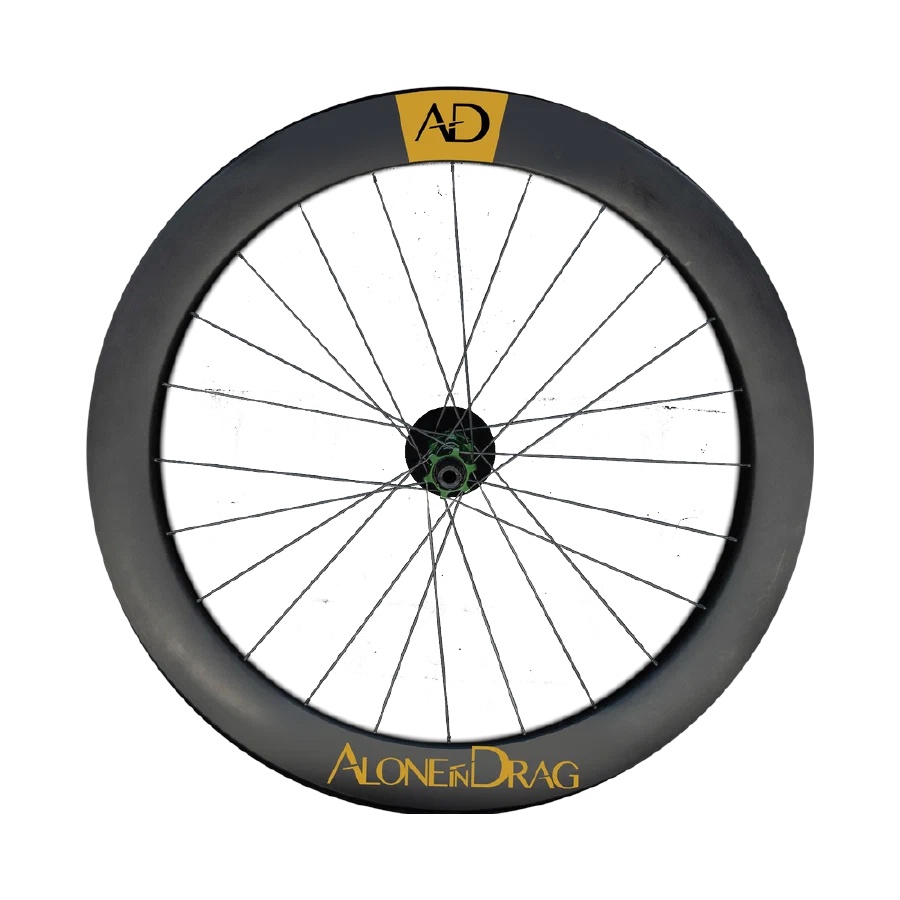
60/50 mm · 1 386 g
Olympic-distance and 70.3 triathlon, time trial, road
7 499 zł / 1 849 EUR
per wheelset
View model →
VI.V: a 60/50 mm wheelset for Olympic-distance triathlon, 70.3 and the road. VIII: an 88 mm front wheel for time trials and flat Ironman courses. Disc: a rear disc in two weights. About 70 rims, three days in the Silverstone tunnel and a season ridden by PZTri national-team athletes before we sold the first wheelset.
Three models. Two Disc variants. Prices in PLN and EUR. TRiPEAK G5 Ceramic bearings in every wheel.
wheelset: front + rear
60/50 mm · 1 386 g
Olympic-distance and 70.3 triathlon, time trial, road
7 499 zł / 1 849 EUR
per wheelset
View model →front wheel
88 mm · 790 g
Time trial, flat Ironman and 70.3
3 499 zł / 849 EUR
per front wheel
View model →rear wheel, two variants
Time trial and Ironman, including courses with climbs
per rear wheel
View model →Ironman, flat and rolling courses
SaBRe VIII (88 mm front) + Light SaBRe Disc (910 g rear)
Bundle price 10 999 zł / 2 699 EUR
Ask about a bundleTime trial, Ironman
SaBRe VIII (88 mm front) + SaBRe Disc (1,050 g rear)
Bundle price 8 999 zł / 2 199 EUR
Ask about a bundleFour wheels: Performance
SaBRe VI.V + SaBRe VIII + SaBRe Disc
Bundle price 15 499 zł / 3 799 EUR
Ask about a bundleFour wheels: Premium
SaBRe VI.V + SaBRe VIII + Light SaBRe Disc
Bundle price 16 999 zł / 4 149 EUR
Ask about a bundleHow to buy: email cda@aloneindrag.com or test the wheels during a track session. Details →
Compare the use case, weight and price of the three models.
wheelset: front + rear
Olympic-distance and 70.3 triathlon, time trials, road racing.

60 mm front and 50 mm rear beat the 88 mm profile on aerodynamics, weight and moment of inertia under mass-start road-racing conditions. The set weighs 1,386 g. In a 39.7 km race simulation at 43 km/h, 60/50 uses 10.5 kJ less than 50/50, which is 3.2 W over the whole ride. Tyres: Continental Aero 111, GP5000 S TR or GP5000 TT, 25–28 mm. Soul-Kozak SP 2.0 hub, TRiPEAK G5 bearings, Pillar Wing 20 spokes.
 P. Klimas
 M. Bruździak
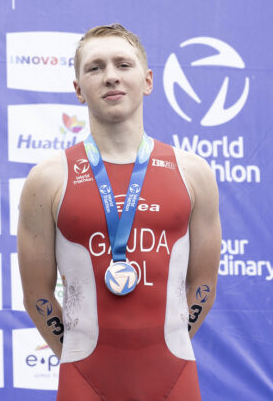 J. Gajda


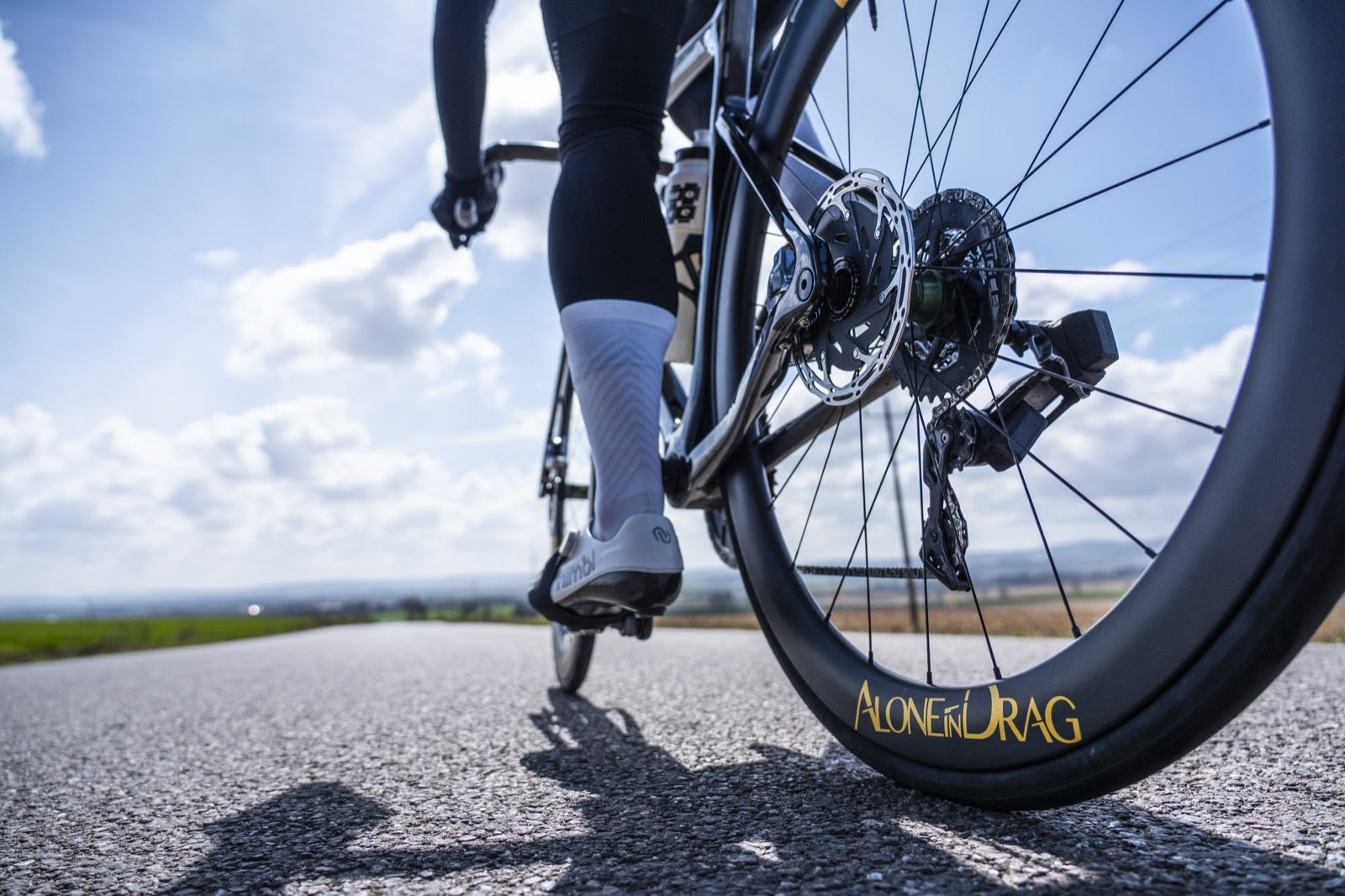
front wheel
Time trials and flat Ironman or 70.3 courses: high speed, little climbing. For riders who already have their position and are looking for watts in equipment.

An 88 mm front wheel. The profile came out of the same Silverstone measurements as the VI.V. 790 g, 21 mm internal and 30 mm external rim width. The profile was developed for the Continental Aero 111 (stability) and GP5000 TT (speed). Rear: SaBRe Disc. The price is for one front wheel.
 M. Łagownik
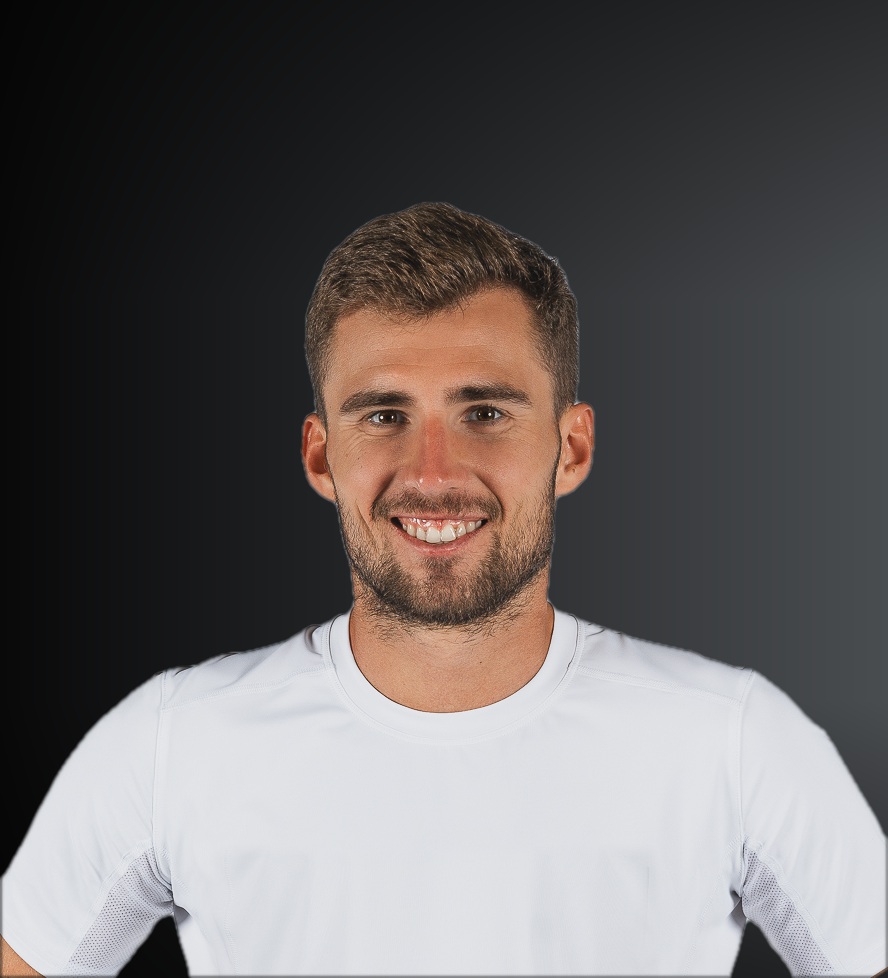 R. Wilkowiecki
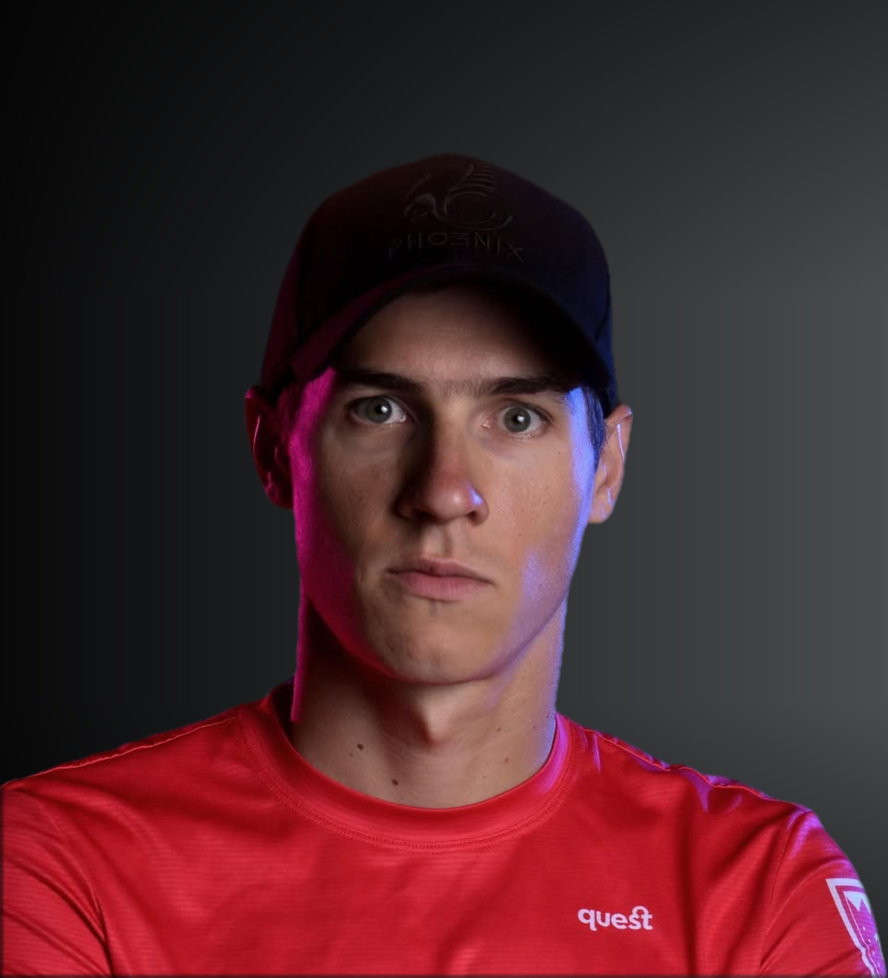 K. Stępniak


rear wheel, two variants
Time trials and Ironman, including courses with climbs: weight comparable to a deep-section spoked wheel.

A rear disc in two variants: SaBRe Disc 1,050 g, Light SaBRe Disc 910 g (higher Toray T800 share). AiD × Soul-Kozak M-netic hub: a magnetic freehub instead of pawls and springs. 23 mm internal, 30 mm external rim width, 25–28 mm tyres. Pairs with the SaBRe VIII up front.
M. Łagownik
R. Wilkowiecki
K. Stępniak


Weight, widths and use case side by side, across all four variants.
| VI.V | VIII | Light SaBRe Disc | SaBRe Disc | |
|---|---|---|---|---|
| Type | Wheelset (front + rear) | Front wheel | Rear wheel (disc) | Rear wheel (disc) |
| Rim depth | 60 mm / 50 mm | 88 mm | Full disc | Full disc |
| Weight | 1386 g (wheelset) | 790 g | 910 g | 1050 g |
| Int. width | 19 mm | 21 mm | 23 mm | 23 mm |
| Ext. width | 28 mm | 30 mm | 30 mm | 30 mm |
| Bearings | TRiPEAK G5 Ceramic | TRiPEAK G5 Ceramic | TRiPEAK G5 Ceramic | TRiPEAK G5 Ceramic |
| Hub | Soul-Kozak SP 2.0 | Soul-Kozak SP 2.0 | AiD × Soul-Kozak M-netic | AiD × Soul-Kozak M-netic |
| Use case | Olympic-distance triathlon, TT, road racing | TT, flat Ironman courses | TT, Ironman | TT, Ironman |
| Price | 7 499 zł 1 849 EUR | 3 499 zł 849 EUR | 7 999 zł 1 949 EUR | 5 999 zł 1 449 EUR |
The same SaBRe VI.V wheelset, broken down parameter by parameter: mass, moment of inertia, tunnel data and a real-race simulation.
Four parameters, one SaBRe VI.V wheelset. Scroll to see how mass, moment of inertia, tunnel CdA and a race simulation all point to the same asymmetric answer.
60 mm front · 50 mm rear
+48 g on the front wheel
Δ 0.0045 kg·m²
50/50: baseline
60/50: equivalent in energy to 32 s of coasting. This is not a prediction of finishing 32 s sooner.
Scroll to see the next parameter
60 mm front / 50 mm rear
Rim depth and shape testing in the Silverstone wind tunnel (the most promising rims out of about 70 gathered in the first programme, then further sessions) pointed to 50–60 mm as the aerodynamic sweet spot for an all-round wheel. That left four front/rear configurations: 50/50, 60/50, 50/60 and 60/60.
“Don’t go 50/50 if 60/50 is on the table”: that’s the claim this module checks, parameter by parameter.
The difference between a deeper and a shallower rim
The deeper rim weighs 50 g more, but shorter spokes save 2 g. Changing from 50 to 60 mm therefore adds 48 g per wheel. Together that gives four possible outcomes for the full wheelset.
The farther the mass sits from the hub, the harder it is to accelerate
A deeper rim keeps more mass farther from the axle. That's the second argument for a shallower profile: the more mass sits at the rim, the harder it is to accelerate out of a corner.
Tunnel data at 40 and 45 km/h
In the tunnel data shown, 60/50 has lower CdA than 50/50 at each of the four yaw angles: 0°, 5°, 10° and 15°. In mixed setups, the front-rear order genuinely matters.
Tunnel data: CdA vs. yaw angle. 60/50 has lower CdA than 50/50 at all the yaw angles shown.
39.7 km · 43 km/h · 325 W
A real file from a fast, flat road race, second by second
The result against 50/50, at the same power and weather across the full distance:
On a climb that result shifts: with no wind, the point where the lighter 50/50 starts winning sits around a 4% gradient. Add a crosswind and the threshold rises to 6–8%, because the same wind that gives 60/50 the edge on the flat keeps that edge going uphill.
From the first market rim to the start line in Wollongong took more than a year. Every stage ended with a number, not an opinion.
We could have ordered a batch of wheels from Asia, put a logo on them and started selling. Instead we decided to choose every part ourselves and measure whether it makes a difference.
Over more than a year we brought in rims from different factories: profiles from 50 to 105 mm, different widths, carbon manufacturers and rim profile geometries. Some looked identical and behaved completely differently in the air.
~70 rims in the programme
We took the most promising rims to the Silverstone wind tunnel: three days, every rim in several configurations, at different yaw angles and with different tyres. We feared none would come out faster than the cheapest option on the market. The opposite happened: 60 mm front and 50 mm rear beat the 88 mm profile on aerodynamics, weight and moment of inertia under mass-start road-racing conditions. The same data produced the 88 mm profile for the SaBRe VIII.
60/50 the profile that won

We measured every profile and tyre pair separately. The wheels were tested on Continental GP5000 25 mm tyres, chosen for their combination of aerodynamic performance, grip and puncture resistance. The SaBRe VIII works best with the Continental Aero 111.
25 mm reference tyre
The hubs are made in Swidnik by Mariusz Kozak. We do not buy a catalogue product; we talk through the parameters for a specific wheel. The VI.V and VIII run the SP 2.0 hub, the Disc got its own hub with the magnetic M-netic system instead of pawls and springs.
M-netic magnets instead of springs (Disc)
Pillar Wing 20 spokes: a flattened profile that keeps its stiffness. TRiPEAK G5 ceramic bearings as standard, not as an upgrade. Every wheel is balanced individually so it does not vibrate at high speed.
G5 TRiPEAK ceramic as standard
Before choosing 60/50 over 50/50 we modelled the trade-off: 48 g on the front wheel, 0.0045 kg·m² of moment of inertia, CdA versus yaw at 40 and 45 km/h and a simulation of a real race: 39.7 km, 43 km/h, 325 W. Result: 10.5 kJ less work than 50/50, or 3.2 W on average, equivalent in energy to 32 s of coasting. It is not a prediction of finishing 32 s sooner. The data and assumptions are in the lab above.
3.2 W 60/50 versus 50/50 over a race distance
The wheels covered hundreds of kilometres under Paulina Klimas, Maciej Bruzdziak and Kuba Gajda, then the World Championship final in Wollongong and World Cups in Korea and Mexico. Only then did we open sales. Half of the first batch was gone before the wheels reached the warehouse.
3 models from one programme
Soul-Kozak hubs (SP 2.0, M-netic in the Disc), Pillar Wing 20 spokes, TRiPEAK G5 ceramic bearings and individual balancing of every wheel.

Hubs designed and manufactured in Poland. The VI.V and VIII use the SP 2.0 model; the Disc uses the AiD × Soul-Kozak hub with the M-netic system.
In the SaBRe Disc hub, ring magnets press the ratchet ring. The M-netic system replaces traditional pawls and springs.
Every wheel is individually balanced to ensure smooth operation, prevent high-speed wobble and minimise power loss.
Aerodynamic flat-profile spokes that minimise aerodynamic drag. Lightweight, durable, designed to work with Soul-Kozak Straight Pull hubs.

TRiPEAK is a Taiwanese maker of high-quality bicycle bearings and components. The name comes from Taiwan's three highest peaks (~3900 m). They design steel and ceramic bearings, bottom brackets and derailleur cages around low friction, tight tolerances and precise sealing. The choice of Lidl-Trek, XDS Astana and Equipo Kern Pharma riders.
More about TRiPEAK technology →G3-grade balls give the lowest rolling resistance and longer bearing life. Used by pros at the world's biggest races.
G5-grade ceramic balls give the best performance-and-life-to-price ratio.
Steel balls with 0.005 mm roundness deviation and extra sealing: the pick for training and bad weather.
Photos from races and test sessions: the same wheels you test in training race at World Cup events.


Email cda@aloneindrag.com. Include the model, variant and the bike you are choosing wheels for; for the VI.V, also the freehub: Shimano or SRAM XDR. Ask about availability, bike compatibility and purchase terms. If you are unsure which setup to choose, tell us your race distance and the courses you ride, or test every model during a track session.
cda@aloneindrag.com