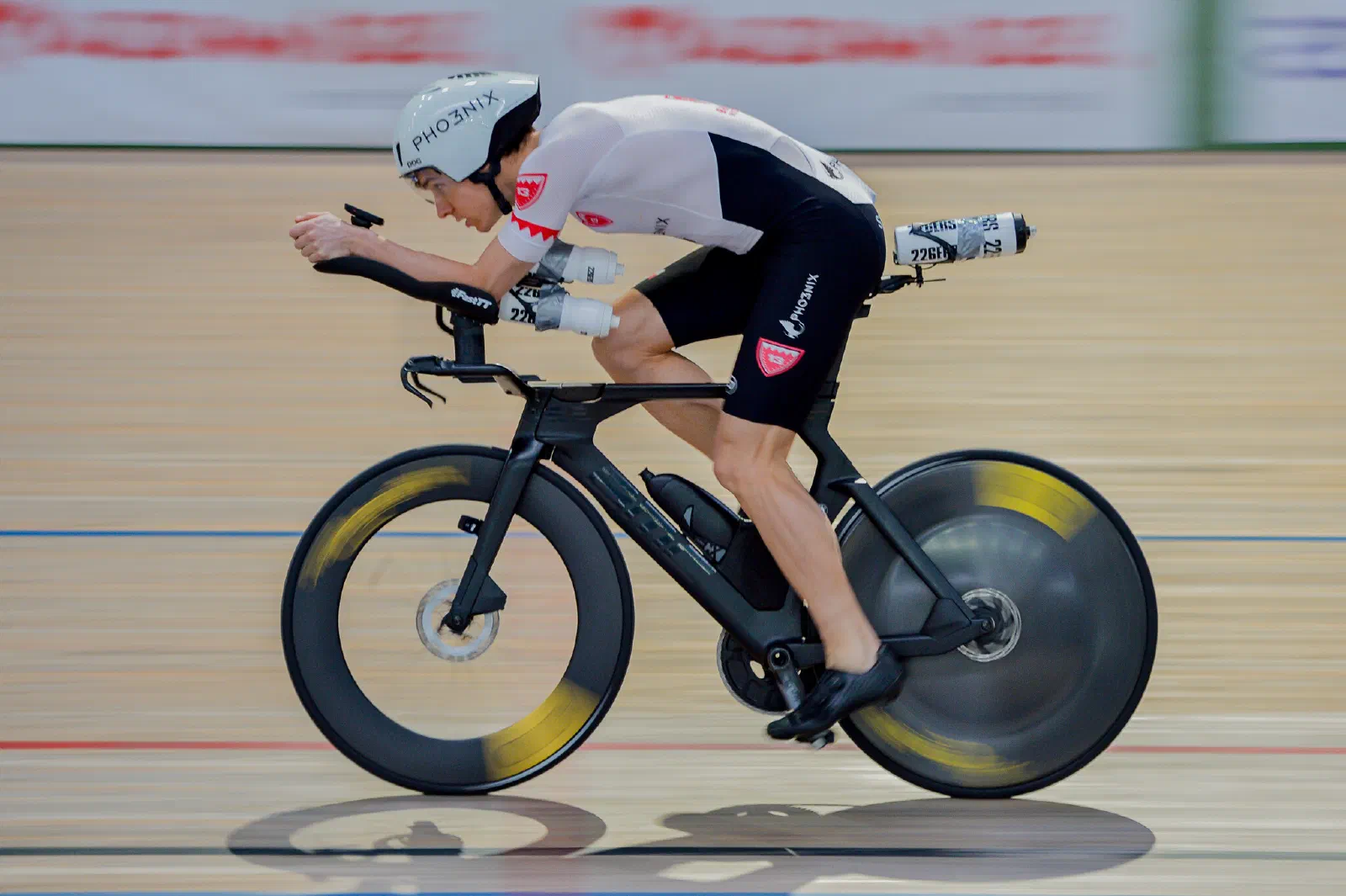
Kacper Stępniak in aero position on the Pruszków velodrome
fot. Kamila Stępniak
Kacper Stępniak during aerodynamic track testing
fot. Kamila Stępniak
Marta Łagownik on a time trial bike with Alone in Drag wheels
fot. Szymon Gruchalski
A rider on the AiD rig in the Kraków University of Technology wind tunnel
fot. Marta Łagownik
Aerofitting · track and tunnel

Same power. More speed.

We test your position and equipment at the Arena Pruszków velodrome and in the Kraków wind tunnel. In both venues we calculate CdA, and in the tunnel we measure it across a range of yaw angles.

Arena Pruszków track from 2,970 zł incl. VATKraków tunnel from 4,600 zł incl. VAT (2 h minimum)

  • PRO
  • Age Group
  • Masters
  • First start
Example session · 03.2025 · 39–41 km/h
CdA across 13 runs. The value falls from 0.263 m² at baseline to a best of 0.231 m² on run seven.CdA across 13 runs. The value falls from 0.263 m² at baseline to a best of 0.231 m² on run seven.CdA (m²)0.245Baseline: 0.2630.263Baseline0.263Pads narrower: 0.258Pads narrower0.258Saddle, −1 cm: 0.252Saddle, −1 cm0.252Extensions 25°: 0.251Extensions 25°0.251Repeat: 0.247Repeat0.247Pads + bottle higher: 0.237Pads + bottle higher0.2372nd bottle: 0.2310.2312nd bottle0.231Helmet A: 0.231Helmet A0.231Helmet B: 0.237Helmet B0.237Helmet C: 0.235Helmet C0.235Cockpit taping: 0.231Cockpit taping0.231Helmet D: 0.238Helmet D0.238Helmet E: 0.231Helmet E0.231
−12% CdA reduction
25–30 W saved at 40 km/h
3.6 s/km time gain at 40 km/h

From a session report, anonymised. Five helmets; none beat the pad-and-bottle setup.

Scroll
480+ aerofitting sessions since 2021
4,725 measurement runs
17 W mean saving at test speed, usually 38–46 km/h
1.7 s/km median time saving
Pricing

Session prices · Arena Pruszków track and Kraków wind tunnel

Solo 2 h · track
2 970 zł
incl. VAT
2 750 zł net + 8% VAT

~9–10 test changes

Arena Pruszków. An individual test plan: position, helmet and key equipment.

Ask about dates
2 h · wind tunnel
4 600 zł
incl. VAT
4 259.26 zł net + 8% VAT

Typically 12–15 test changes

Kraków. Position, helmet, skinsuit and equipment details; CdA calculated across different wind directions and riding speeds.

Ask about dates
3 h · wind tunnel
6 900 zł
incl. VAT
6 388.89 zł net + 8% VAT

Typically 15–18 test changes

Kraków. More time for position and equipment combinations; CdA calculated across different wind directions and riding speeds.

Ask about dates

Included in every session

Included with every session on the Arena Pruszków track and in the Kraków wind tunnel:

  • Dedicated testing venue: the indoor Arena Pruszków track with no wind or other riders, or the AiD Aero Lab rig in the Kraków University of Technology wind tunnel
  • Live CdA measurement and comparison after every track run or every tested configuration in the wind tunnel
  • On-site mechanic throughout the session: wheels, position, cockpit, extensions and risers
  • Option to fit modifications on site: selected cockpit components, extensions and risers can be mounted directly on your bike during the session
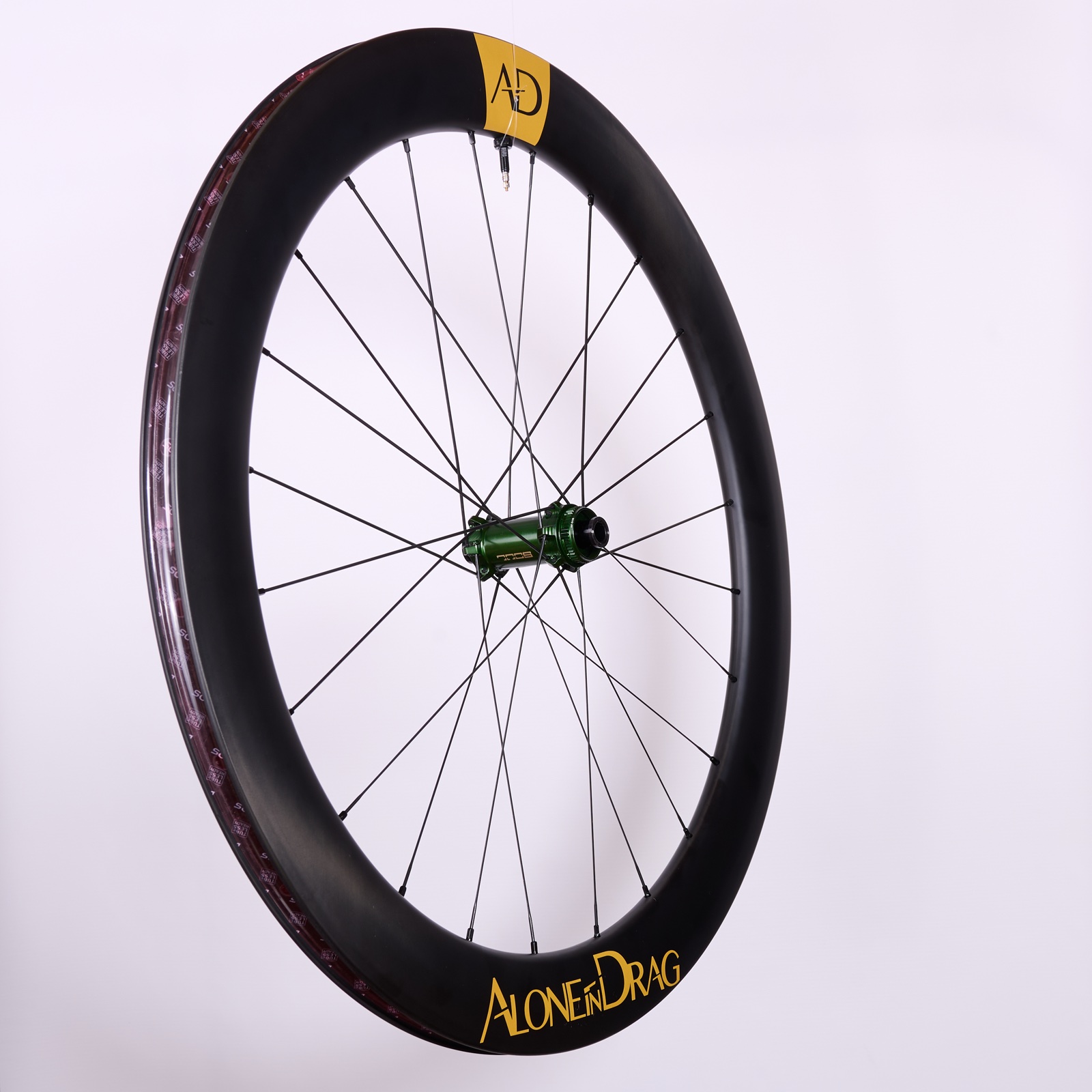
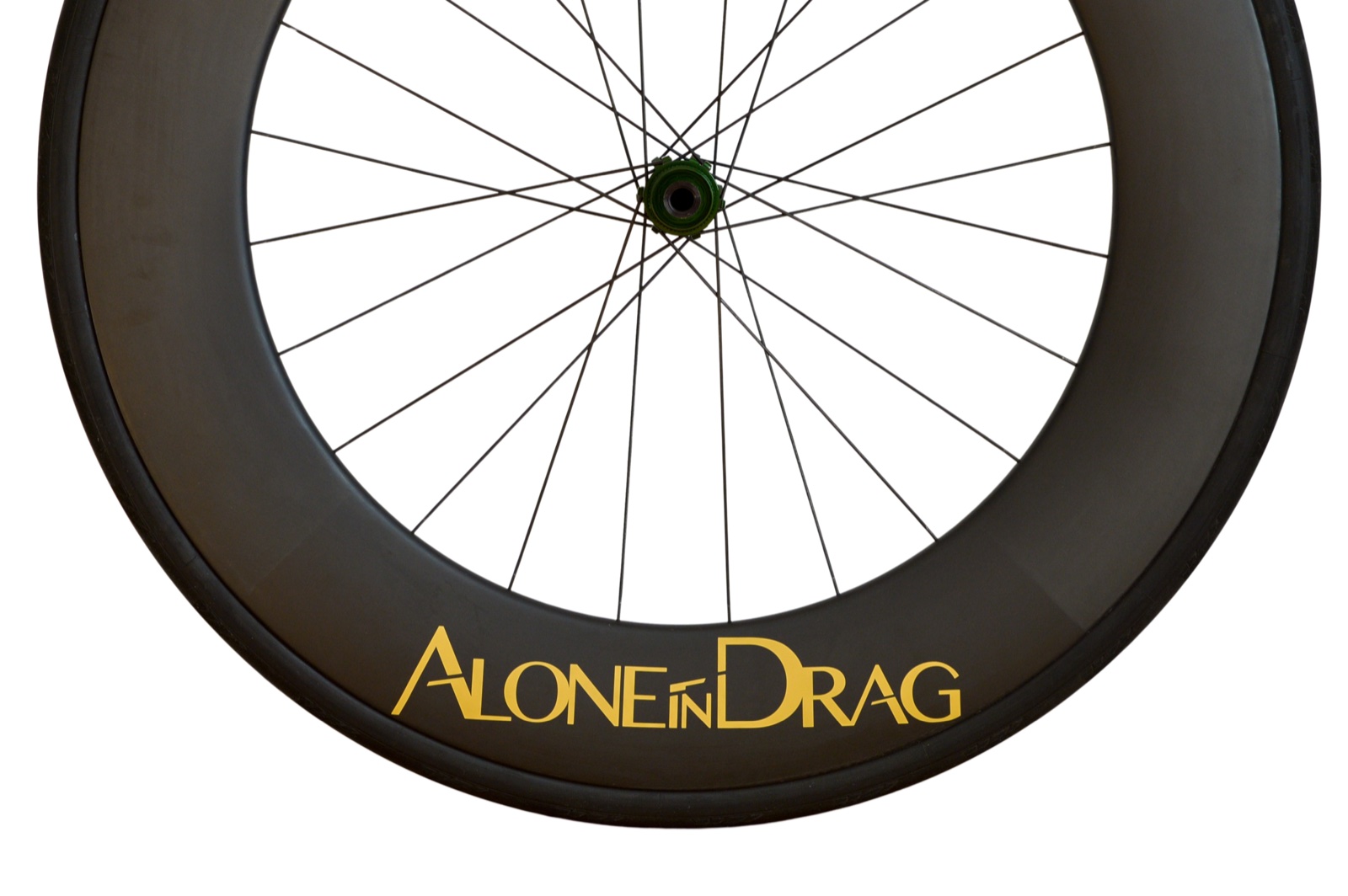
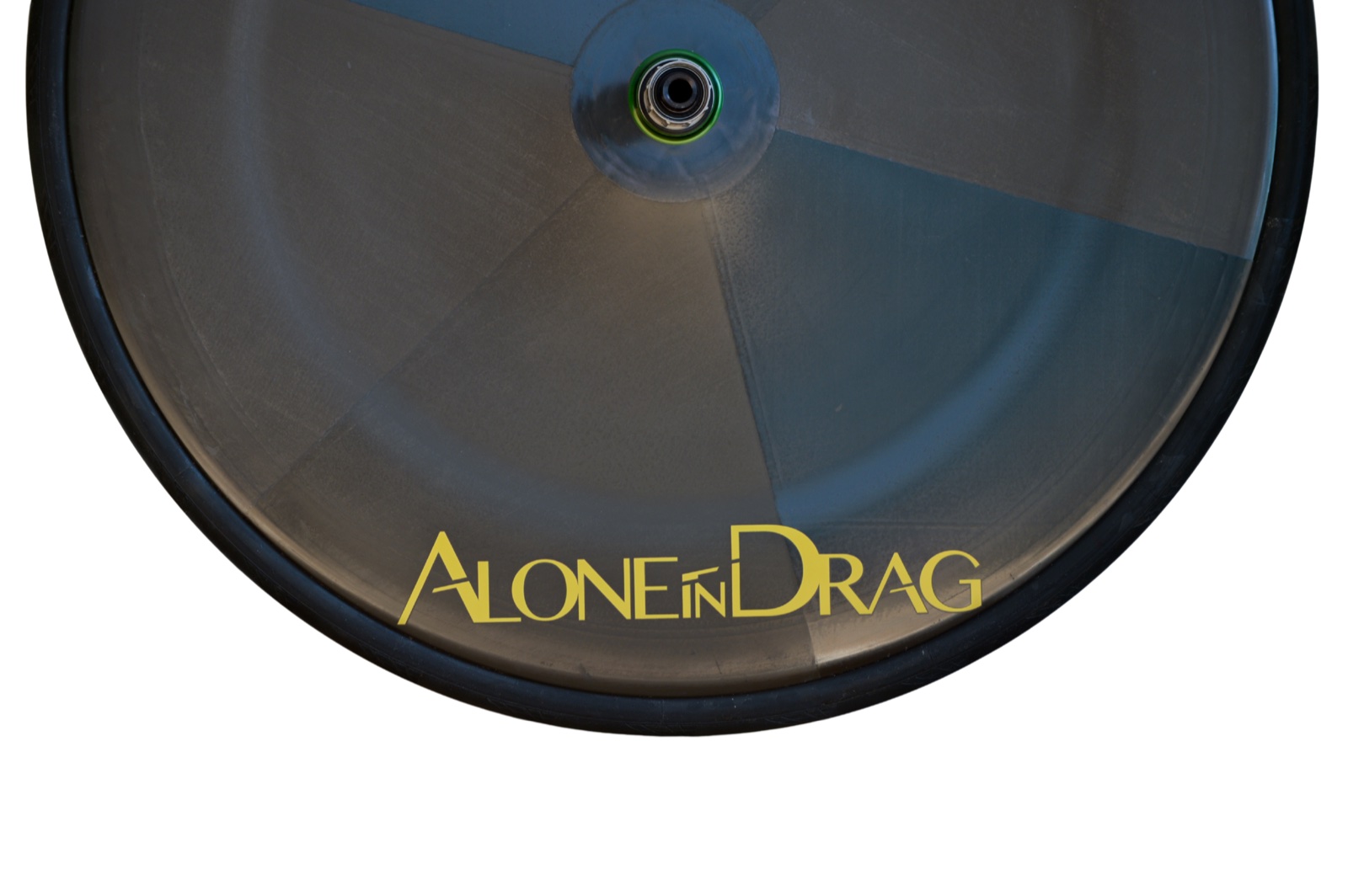
  • Test equipment available during the session: 40+ aero helmet models, SaBRe VI.V, VIII and Disc wheels, and dual-sided power meters
  • Post-session report: every tested configuration, CdA values, watt differences and recommendations for your distance
  • Thank you for your trust and for chasing free speed with us — see you on the track or in the tunnel.

Track sessions: Cancellation later than 14 days before the session: 25% fee.

Wind tunnel · Kraków

The track sets the base. The tunnel finishes the details.

On the track and in the wind tunnel we calculate and lower CdA. At AiD Aero Lab in the Kraków University of Technology wind tunnel, we study drag and the effect of headwinds and crosswinds on motion resistance and bicycle stability across speed ranges, with live position analysis. An hour costs 2,300 zł including 8% VAT; the shortest session is 2 hours.

When the track, when the tunnel

Track

We calculate CdA in real riding on the indoor velodrome. We test position, cockpit, helmet and wheels, and verify that you can hold the new setup under load over your race distance. 2,970–4,050 zł incl. VAT.

Tunnel

Effect of wind yaw angles on your setup, testing across different speed ranges, and live posture analysis with a silhouette overlay. From 4,600 zł incl. VAT (2 h minimum).

Wind angles and stability

On the road, the wind rarely hits you dead ahead. In the tunnel we calculate CdA across the full range of angles reflecting real racing conditions and study how crosswinds affect bike stability and wheel choice.

Race-relevant speed ranges

How a skinsuit, helmet or wheelset performs changes with speed. In the tunnel we test setups across the speed ranges of your target event, from Ironman pace to the individual pursuit.

The details that slip past

We analyse rider position live using a real-time silhouette overlay. That lets us immediately spot changes in head, shoulder and hand posture while measuring the effect of helmets, skinsuits and cockpit setups.

How we count

Our own algorithms turn the measurement data into a clear comparison of CdA and watts across tested yaw angles and speeds to help you choose your race position and equipment.

A rider on a time-trial bike in the test section of the Kraków University of Technology wind tunnel
An AiD engineer adjusting the bike's cockpit in the tunnel test section
A rider and an AiD analyst discussing the setup in the tunnel

Photos: Marta Łagownik

What aerofitting is

Physics, not magic

At 40 km/h roughly 80% of your power goes into overcoming air resistance. Aerofitting measures exactly how much and lets us make changes that lower CdA. First on the track, then in the tunnel.

CdA is the effective drag area: the drag coefficient Cd multiplied by frontal area A. The lower the number, the less power the air eats at the same speed. Everything feeds into it: torso angle, elbow width, helmet shape, rim depth, even the fabric of your suit. So we don't guess. We measure.

We start on the track. Arena Pruszków is an indoor velodrome with no wind, so every run is comparable with the last. You ride your own bike, in your own suit, at your own power. We measure CdA while you ride and compare it run after run. After each run you see the number and know whether the change of position, helmet or bottle helped or hurt. The track shows your real position. The one you can hold for 90 or 180 km, not the one from a static fit.

~80% of resistance at race speed is air
CdA the number we calculate and lower
17 W mean saving at test speed, usually 38–46 km/h
Change, measure, decide. Mechanic on the track.

How CdA affects the power you need

Where your power goes
Aerodynamic drag80%
Rolling resistance12%
Drivetrain friction5%
Bearings and other3%

Breakdown of resistance at 40 km/h for CdA 0.25 m², Crr 0.004 and 85 kg. Indicative values.

Position

Torso angle, elbow width, pad height. We test them with the cockpit because changing one setting affects the rest of the position. The gain needs to be measured.

Helmet

How a helmet sits at your head angle matters more than the label on the box. We compare helmets on you rather than assume which will be faster.

Wheels

Rim depth and how it behaves across yaw angle, not just at zero degrees. A deeper wheel doesn't automatically win.

Extensions and details

Extension height and angle, risers, clothing and aero calf sleeves. Each may make a small difference. Together they can save several watts.

Who it's for

Who the session is for

Aerofitting pays off for anyone who's timed at the finish line, not just pros on a contract.

01

PRO

PZTri national team riders and pros racing World Triathlon and World Cup events. Margins are counted in watts and seconds: 2% of CdA is about 20 s over 40 km at 45 km/h.

  • Full protocol: position, helmet, wheels, suit and CdA measured after every run
  • Data comparable session to session, season to season
  • Run with the PZTri national team
03

Masters

Cyclists and triathletes racing in Masters categories on the road, in time trials and on the track. Racing for seconds and championship medals in their category.

  • A position built for your current mobility and race regulations
  • A setup you can hold over your target distance, proven on the track, not on a static fit
  • A watt saved on aero is a watt you don't have to find in your legs
04

First-timer

First triathlon, first Ironman, first start against the clock. You don't need to wait for your third season to ride in a position built for you.

  • A safe, comfortable position first, aerodynamics second. We measure both.
  • Help choosing a first wheelset and helmet without overpaying
  • A clear baseline to build on in future seasons
How it works

Four steps to a faster ride

01

Enquiry

Send an enquiry; it does not commit you. Track dates open roughly once a month, 3–4 weeks ahead. Give us your race date so we can arrange a session before it.

02

Preparation

After confirmation, send photos of your bike and information about your race schedule. We'll prepare the right equipment and define the session goal.

03

Track or wind-tunnel session

A session at the Arena Pruszków velodrome or in a wind tunnel, depending on the goal. Timing and protocol depend on the chosen format. We measure every change as we go. We can adjust the bike on site and check the effect immediately. Tunnel: 2 h minimum.

04

Report

A detailed report with results for every configuration tested, CdA values, and recommendations tailored to your race distance.

480+ completed sessionsExperience since 2021

See what a session result means

Gains, averages and sessions without a CdA drop

Results

Lower CdA in over 9 in 10 sessions

A session lasts at least 2 hours: a median of 10 runs, averaging 9.9. The results below cover 480+ completed sessions since 2021.

480+ sessions grouped by outcome (left to right). Filled tiles mark lower CdA and outlined tiles mark sessions without a drop. Color distinguishes first visits (green) and return visits (gold).
  • First visit, lower CdA
  • Return visit, lower CdA
  • First visit, no drop
  • Return visit, no drop

−7% lower CdA on average 17 W mean saving at test speed, usually 38–46 km/h 1.7 s/km median time saving

  • 480+ completed sessions
  • 4,725 measurement runs
  • ≈337 riders
  • 79 riders with at least 2 sessions
  • 140 return sessions

Where the gain comes from

Dataset: 480+ sessions, 3,991 change steps. A step is a run describing a change relative to a referenced run or baseline; baseline, repeat and virtual runs are not steps.

What changed in the best run

  • Helmet 35.3%
  • Cockpit 17.4%
  • Hydration and storage 13.6%
  • Wheels and tyres 10.6%
  • Position and head 9.5%
  • Bike and frame 0.5%
  • Other 13.2%
Share of primary change categories in sessions’ best runs. The first matching keyword in the change description determines the category. Setups are cumulative: this is not the isolated effect of one item.

Share of the net CdA drop

  • Cockpit 23.2%
  • Position and head 18.8%
  • Helmet 15.7%
  • Hydration and storage 13.8%
  • Wheels and tyres 13.1%
  • Bike and frame 0.4%
  • Other 15%
Category contributions to the net drop across chains of changes, not a share of sessions. Each step is compared with the run referenced in its description. Remaining categories and measurement noise are grouped under Other.
Ask about dates
Transparency

Every session has a result. Not every result is lower CdA.

A gain can mean a faster setup, confidence in what to race, or a more comfortable position without adding drag. We do not promise the same improvement for every rider.

Sessions with a CdA comparison 480+ sessions
Across 480+ completed sessions, over 9 in 10 finish with lower CdA and the rest without a drop. We compare the baseline run with the lowest-CdA run in the same session, not necessarily the last.
What the averages mean
The mean CdA drop (7%) covers the full 480+ session dataset, including sessions without a drop. The 17 W mean saving covers sessions with a drop and a power value, at each session’s lower test speed; usually 38–46 km/h, not one common reference speed.

Medians: CdA drop 6% (all sessions), power saving 14 W, time saving 1.7 s/km. These are session results, not a guaranteed finish-time gain.

Gear versus position

Gear versus position: what the track shows

Before buying more gear, see what a position change can do. Helmet and head-position results come from the session data; the other cards show individual track comparisons, not whole-dataset averages.

Helmets vs Posture
5 W typical saving from head position

A 2,500 zł helmet vs head position and shoulder shrug

Gear

The best tested helmet was slower than or equal to the reference setup in about 30% of sessions. A well-chosen helmet saved about 6 W on average at test speed. These are best-helmet-per-session results, not all helmet steps.

Biomechanics

A typical head-position saving is about 5 W: the median of steps that lowered CdA. One session in ten gains more than 18 W from head position. Watts use the run’s lower test speed, not a common reference speed.

Track takeaway: A helmet only works when it matches the line of your back and the way you hold your head.
Hydration
up to 27 W difference between a frame bottle and BTA

Frame bottle vs BTA between the arms

On frame

A down-tube bottle, versus riding with no bottle: +4 to +5 W of drag.

In cockpit (BTA)

A horizontal BTA bottle between the forearms changes the airflow structure around the hands, arms and torso. Versus riding with no bottle: 12 to 22 W less drag in our measurements.

Track takeaway: A BTA bottle between the arms is often the most aerodynamically efficient place to carry hydration. Not in every setup, which is why we measure it.
Pad width
6–8 W gain from 2 cm wider pads

Squeezing the elbows vs pads 2 cm wider

Too narrow

Forcing the elbows in pushes the shoulder blades out (the back bulges like a sail) and stops you tucking the head.

Optimal

For riders with broader shoulders, widening pads by 2 cm reduces drag by 6–8 W and unlocks full breathing.

Track takeaway: Narrow isn't always aero. What matters is airflow across the whole torso and head.
Stories

Three national-team results

Three PZTri projects, each with a track number and a race result.

-13% CdA CdA reduction

Bahrain: 411 W for ten minutes on the time-trial leg and a DNF; the setup was not aerodynamically dialled in. A few months later, after work on position, helmet and wheels, Maciek rode 405 W in Korea and took 3rd at the World Cup. Less power, better result.

Maciej Bruździak — portrait on a dark background
Maciej Bruździak
PZTri national team, World Triathlon #46
See the project →
+8 cm higher handlebar, the day before Nationals

The day before the Polish Championships, the AiD team raised Paulina's handlebar by 8 cm on a positive-angle stem. The new position turned out to be both more aero and more comfortable, and her result at Nationals beat the previous year's.

Paulina Klimas — portrait on a dark background
Paulina Klimas
PZTri national team
See the project →
80+ W combined savings

Chain waxing, SaBRe wheels and a more aggressive position saved Kuba over 80 W at 45 km/h (roughly 65 W of that from CdA alone), and he started reaching the front groups earlier than the previous season. A new position is phased in: too much training load right after the position changes overloaded the triceps.

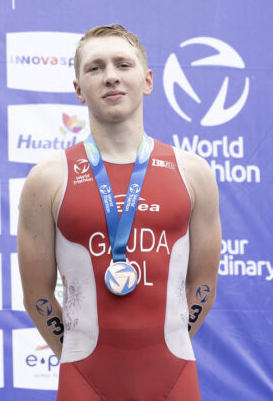
Jakub Gajda
Jakub Gajda
PZTri national team
See the project →
FAQ

Frequently asked questions

Arrive with your own bike in full race configuration (shoes, race suit, helmet). Make sure the bike is in good working order. We'll send you a preparation checklist by email beforehand.
Yes. We test time-trial, road and gravel bikes. Our road work includes sessions with the PZTri Olympic squad.
We measure aerodynamic drag while you ride your own bike in an indoor hall with no wind. Based on power, air density and relative riding speed. You get a CdA result after every run and compare it with the baseline run from the same session.
No. We bring dual-sided Garmin power meters for Shimano and Look cleats. If you have a good dual-sided meter of your own, we run the session on it.
Track: Arena Pruszków, an indoor velodrome 15 km from central Warsaw, by car or suburban rail; indoors, so weather is irrelevant. Tunnel: our rig in the Kraków University of Technology wind tunnel, Kraków.
Yes. A coach or someone accompanying you can stay for the whole session and see the result after every run.
Aero helmets from multiple brands, SaBRe wheels (VI.V, VIII, Disc), extensions, risers and different cockpit configurations. We will send the full equipment list before your session.
On the track, 2 h covers 9–10 changes and 3 h covers 12–15: position, helmet, equipment and combinations. In the wind tunnel, 2 h covers 12–15 changes and 3 h covers 15–18. We choose the format to suit the session goal. Group bookings and sessions longer than 3 h are available, especially for riders and teams analysing fine details or making equipment and sponsorship decisions before the season. The longest session we have run was 10 h across 2 days (2× 2 h + 3 h).
You get a detailed report: the data from every tested configuration, CdA values, estimated power and time savings for your race distance, and the interpretation: what we changed, what each change was worth and what to do with it before your race.
Yes. Especially early in the sport, it pays to accelerate your progress by learning from others' mistakes. Aerofitting answers whether riding in a very aggressive position actually saves much time, whether you need to hold your forearms very close together, and whether it makes sense to buy another helmet that merely 'looks faster'.
An hour on our rig in the Kraków University of Technology tunnel costs 2,300 zł including 8% VAT. The 2 h package costs 4,600 zł incl. VAT and typically covers 12–15 changes; 3 h costs 6,900 zł incl. VAT and typically covers 15–18. In the tunnel we calculate CdA across different airflow angles and speed ranges, with live silhouette analysis.
In both venues we calculate and lower CdA. On the track we test position, cockpit, helmet and wheels in real riding at race speed and load under headwind conditions. In the tunnel we test the effect of yaw angles on CdA, evaluate equipment across speed ranges, and analyse posture live using a silhouette overlay, though because the bike is mounted on a test rig we cannot assess how the rider feels in that position under full race load.
Enquiry

Plan your session

Choose a session format and tell us your goal. After you send the enquiry, we will reply with available dates. An enquiry does not confirm a booking.

Required field

Discipline

Level

Session goal

Session format

Contact

Calculator

How much you could save

Set distance and speed. The default 7% is our mean CdA drop across 480+ sessions, including those without a drop. Move the slider if your baseline is better or worse.

0 Power saved (W)
0:00 Time saved (min:s)

A simplified physics model for a ballpark figure. The real result depends on your starting position and equipment; exact numbers come in your post-session report.

R&D

Before it reaches a session, we test it ourselves

The track, the Silverstone tunnel, our own rig in Kraków and development projects. Four places, one method.

Arena Pruszków

The track to ourselves: an indoor hall with no wind and no other riders on the boards. You compare every run with the last while we calculate the CdA drop and assess stability and comfort.

Silverstone wind tunnel

We keep going back to the tunnel in England. It started with the SaBRe programme: we collected around 70 rims from across the market and tested the most promising rims in several configurations and yaw angles. Then further series of wheels, helmets, skinsuits and positions. That's where we worked out the protocols we now run at home.

70
rims in the first SaBRe programme

AiD Aero Lab, Kraków

At AiD Aero Lab in the Kraków University of Technology wind tunnel, our own algorithms and specially designed rig let us study aerodynamic drag and how crosswinds affect bicycle stability to help you choose your position and equipment.

The national team and an amateur get the same method

The same method, the same measurements, and the same equipment go into a session with the PZTri national team and a session with an amateur preparing for their first Ironman.

Test equipment

Try before you buy

40+
aero helmets
  • Specialized: Evade III (S, M)
  • Kask: Bambino Pro Evo Light (M)
  • POC: Procen (L)
  • Giro: Aerohead (M)
  • Specialized: Evade III (S, M), TT 5 (S)
  • Kask: Bambino Pro Evo Light (M), Mistral (M, L), Mistral 3.0, Bambino (M), Beluga (M), Utopia (L)
  • Endura: D2Z Aeroswitch (M/L)
  • Met: Drone (M, L), Drone II, Codatronca (M, L)
  • POC: Procen (L), Tempor (L/XL)
  • Giro: Aerohead (M), Aerohead Ultimate (M), Aerohead II (M)
  • Lazer: Volante (M)
  • SweetProtection: Tucker (L), Redeemer V2i (L)
  • Ekoi: Veloce (M), PURE AERO (M)
  • Uvex: Race 8 (L), Ultimate Race X
  • HJC: AddWatt 1.5 (S)
  • Van Rysel: Xcr (L), RCR-X 2
  • Rudy Project: Wing Dream (L)
  • Giant: Rivet TT (L)
  • ABUS: TimeShifter TT (L), GameChanger 2.0 MIPS (M)
  • SCOTT: Split MIPS (S/M)
  • Oakley: Velo TT (S/M), Velo Mach MIPS (M), Velo Stelvio Pro (M)
  • Limar: Alien
3
SaBRe wheel models
SaBRe VI.V SaBRe VIII SaBRe Disc
30+
aero accessories
  • Extensions and adapters: FastTT 2.0 Triathlon (S/M/L)
  • Saddles: Wove M8
  • Arm cups: TriRig Open Back
  • BTA & Bottles: FastTT BTA Towers
  • Clothing & aero: Rule28 Aero Base Layer (M)
  • Extensions and adapters: FastTT 2.0 Triathlon (S/M/L), FastTT TT3 Time Trial, FastTT Adapters, FastTT Angle Riser / Extended, FastTT Tilt Adapter for Speedmax
  • Saddles: Wove M8, Wove V8, Wove Mags
  • Arm cups: TriRig Open Back, TriRig Closed Back, TriRig Open Back Ultimate Evo, TriRig Closed Back Ultimate Evo
  • BTA & Bottles: FastTT BTA Towers, FastTT Adjustable BTA Adapter, FastTT Tri BTA Bottle Aero Cone, TriRig BTA Elevator, TriRig Hydra Carbon Aero Bottle, TriRig Kappa Carbon Cage, TriRig Multi-bottle BTA Rail, TriRig Beta Bottle Carrier One, TriRig Polymount, TriRig Super-X Adaptor Plate
  • Visors: Kask Visor Aero 1.0 (M), Kask Visor Aero 2.0 (M)
  • Clothing & aero: Rule28 Aero Base Layer (M), Huub 3:sixteen Calf Guards (L), Fusion Calf Guards (L), Fusion Aero Socks, Fusion Aero Arms Covers, Aero Silca Socks, Huub Short Over Shoes Covers, Huub Aero Socks, Nopinz Hypersonic Overshoes Long
AiD Pro Team 2026

Athletes who trust us

13%

average CdA reduction in the PZTri national-team project (range 7–18%)

The AiD 2026 team: the PZTri national team on SaBRe VI.V, Long Distance Team AiD on SaBRe VIII + Disc, two Olympic medallists (track, speed skating).

Long Distance Team AiD

Racing on SaBRe VIII + Disc

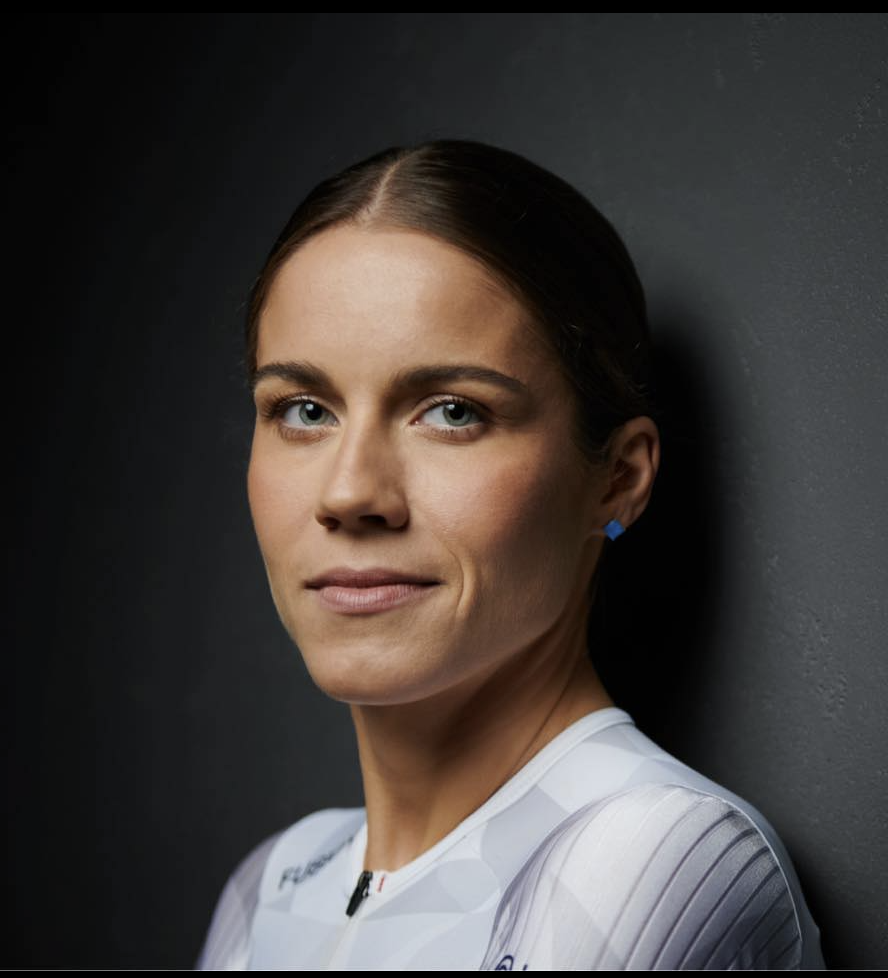
Marta Łagownik
Marta Łagownik
Long-distance triathlon

1st ETU Middle Distance 2024 & 2025. 2nd Worlds Long Distance 2024 & 2025. 1st Challenge Gran Canaria 2024 & 2025.

Robert Wilkowiecki — portrait on a dark background
Robert Wilkowiecki
Long-distance triathlon

9th IM World Championships Nice 2023. 2nd IM Americas Championship Texas. 1st IM 70.3 Warsaw. 1st IM 70.3 Poznań.

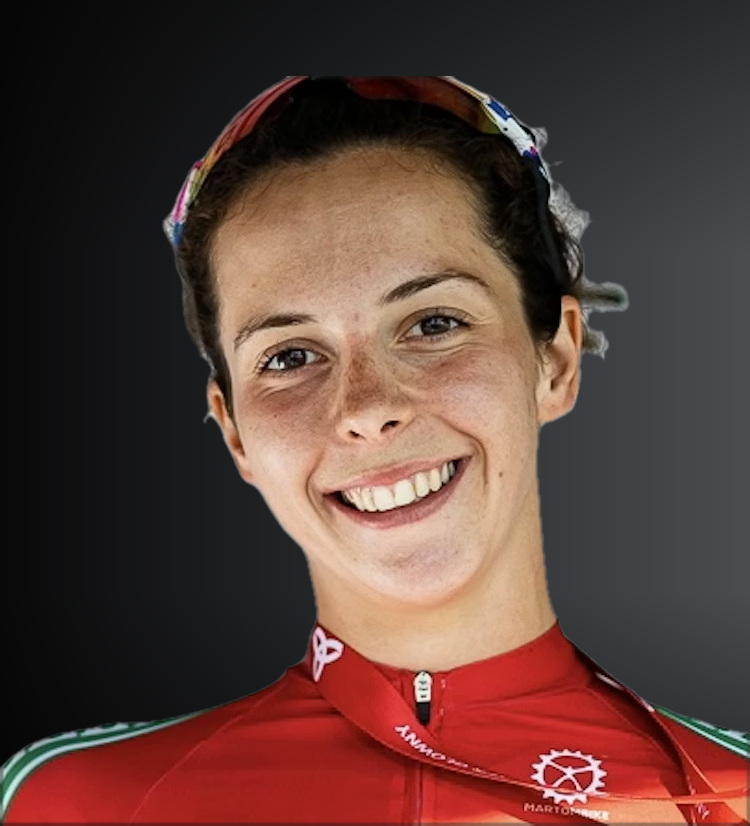
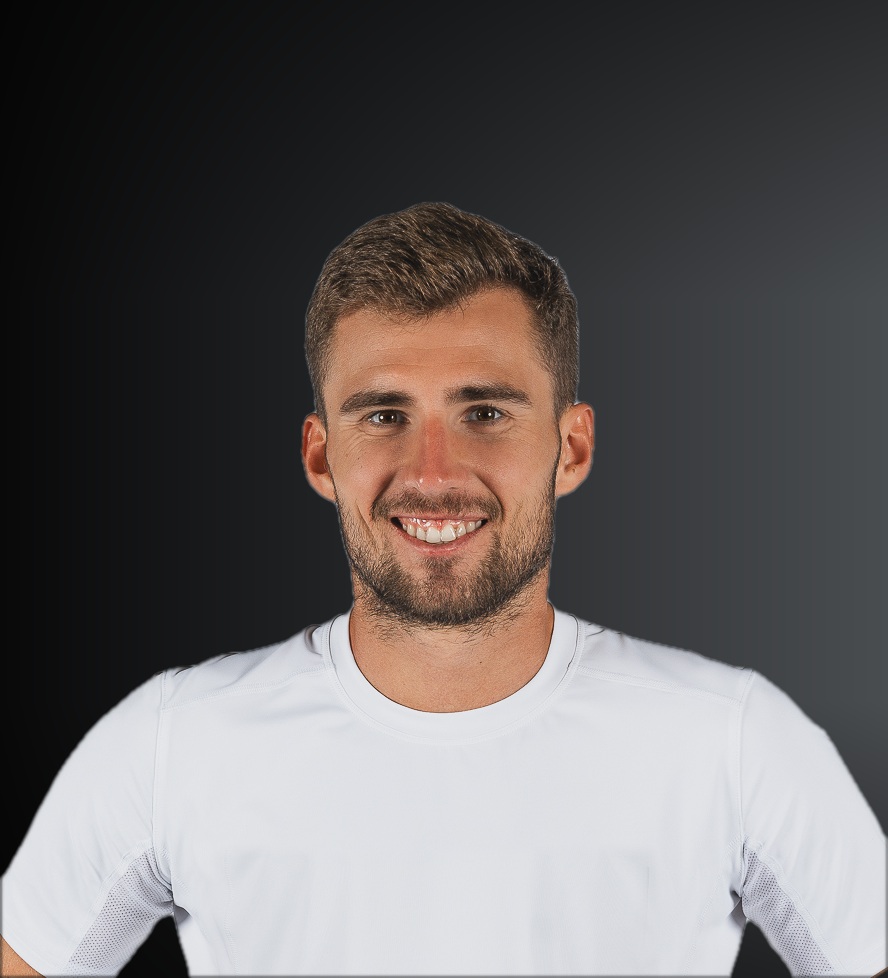
Kacper Stępniak — portrait on a dark background
Kacper Stępniak
Long-distance triathlon

2nd IM Florida. 14th IM World Championships Kona 2024 (debut). Polish record at IM & IM 70.3. 1st IM 70.3 Warsaw. 1st IM 70.3 Cracow.

PZTri national team

Racing on SaBRe VI.V

Paulina Klimas — portrait on a dark background
Paulina Klimas
Triathlon — Olympic distance

1st Military World Championships 2022. 4th European Championships 2021 & 2024. Polish national team PZTri.

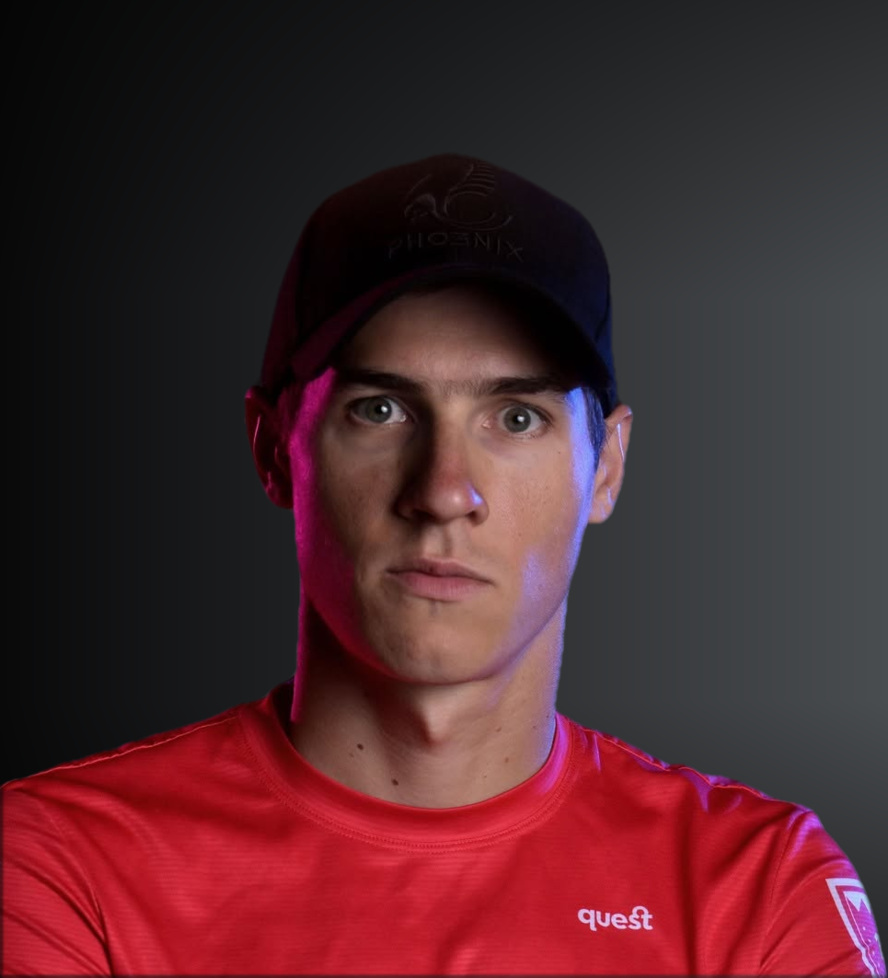
Maciej Bruździak — portrait on a dark background
Maciej Bruździak
Triathlon — Olympic distance

3rd World Cup Korea 2025. 3rd Supertri E World Championship London 2025. Polish national team PZTri. Polish champion across 4 distances.

Jakub Gajda
Jakub Gajda
Triathlon — Olympic distance

3rd World Triathlon Cup Huatulco 2025. 1st European Cup Olsztyn (junior). 2nd Polish Championships 2025 (standard distance).

Olympic medalists

Daria Pikulik
Daria Pikulik

Silver, Track Cycling Omnium, Paris 2024

Władimir Semirunnij
Władimir Semirunnij

Silver, Speed Skating 10,000m, Milan 2026

AeroSensor Wove Soul-Kozak Quintana Roo FastTT TriRig
From the sessions

This is what aerofitting looks like

Track dates open roughly once a month, 3–4 weeks ahead.

The enquiry does not commit you. We reply with a date and a checklist.

480+ aerofitting sessions since 2021 · 4,725 measurement runs · 17 W mean saving at test speed, usually 38–46 km/h